Last updated 2026-08-19
TL;DR
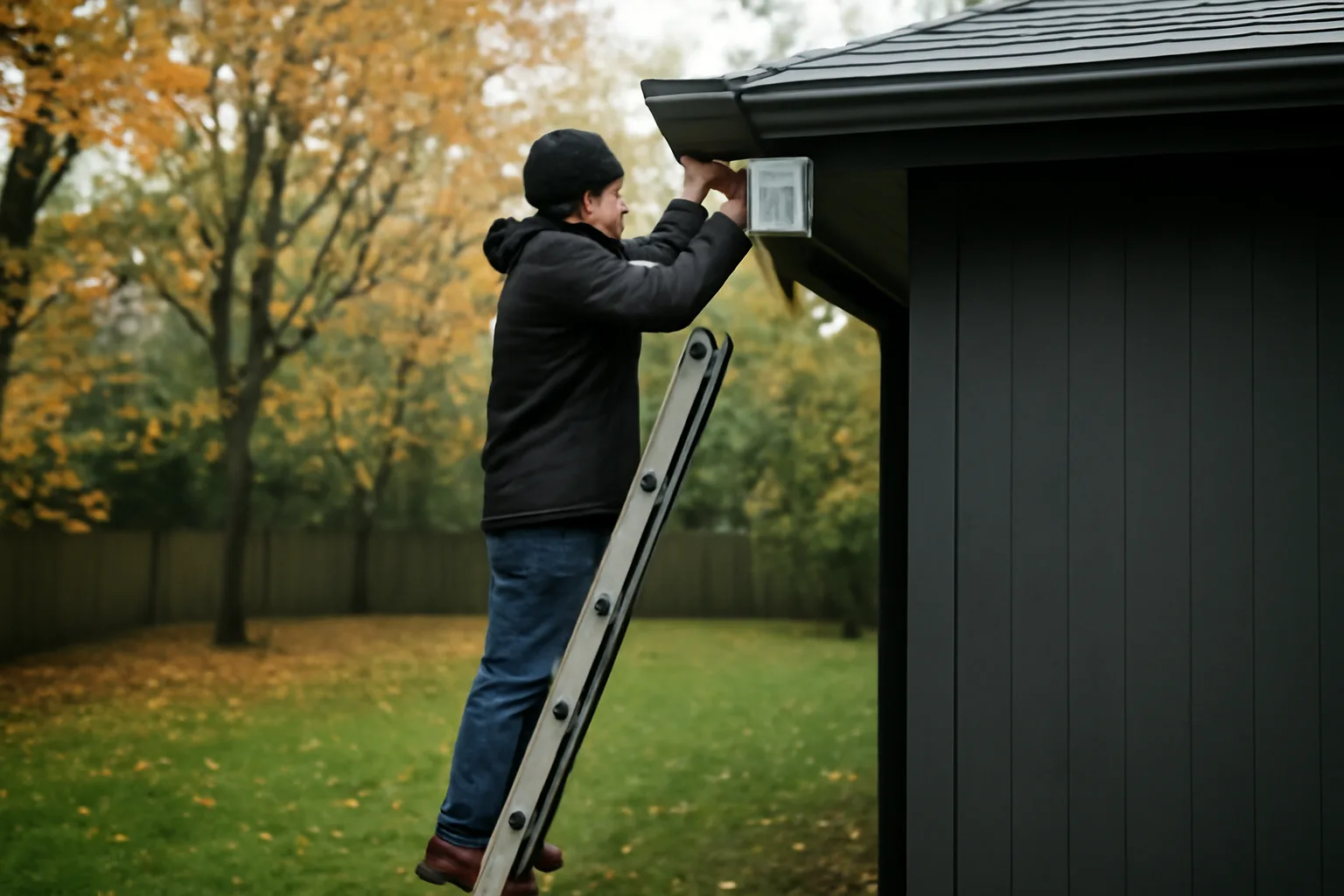
Leaf guard is a cover, screen, or hood on a rain gutter that lets water in and keeps most leaves out. You start by forming a legal business, confirming the contractor class with your state board, buying insurance, and following fall and lead-paint rules. There is no national leaf guard license. Confirm every fee with the board before you take a deposit.
What is leaf guard?
Leaf guard is a cover, screen, mesh, or hood on a rain gutter that lets water in and keeps most leaves out. The same phrase names the paid trade of selling and installing that hardware. It is a building product, not a federal license.
That is the whole object. A trough on the eaves already catches roof water. Leaves, needles, seed pods, and shingle grit sit in that trough, then water backs up. A leaf guard changes the opening so most debris stays out. It does not repeal storms. It does not make fascia immortal.
Homeowners buy it to climb fewer ladders and to stop overflow stains. Crews sell it as measured linear footage plus access. Inspectors still see it as exterior construction when you fasten metal to a house for pay.
Styles differ. Reverse-curve hoods send debris over the edge and try to pull water in along the curve. Micro-mesh sits over the opening and strains water through a tight weave. Wider screens use bigger holes. Foam and brush inserts fill the trough. I would not lead with foam. It holds water and turns into a sponge.
A factory brand is not the category. Some shops hang a one-piece gutter with a built-in hood. Some clip aftermarket covers onto gutters that are already there. Customers still say leaf guard for both. Your board will not care about the brochure name. It will care whether you are contracting.
University extension pages still tell people to look at gutters after heavy weather. Penn State Extension treats clogged gutters as a water-damage problem you manage with inspection and cleaning, not a gadget you forget. [12] If a pitch says never clean again, that pitch is the problem.
Say less often, and still inspect after big storms. You will get fewer angry Saturdays. You will also stay out of the pile of ads that trained buyers to distrust this trade.
How do you start leaf guard?
You start leaf guard by forming a legal business, confirming the contractor class (or a written exemption) with your state board, buying insurance, and only then taking a deposit. There is no national leaf guard card.
Do the boring steps in order. File the entity your state actually recognizes. Most people pick an LLC unless a tax pro has a reason not to. Get an EIN from the IRS if you need one. The IRS online EIN application is free. [5] Open a bank account that is not your rent account. The SBA start guide puts legal structure and tax IDs near the front of the line for a reason. [6]
Then call the contractor board. Ask which class covers gutter hanging and gutter protection in your county. Ask if a dollar threshold exists. Ask if the city stacks a home-improvement registration on top. Get the answer in writing. Boards change thresholds. A blog with a stale number is how people collect fines.
Insurance comes before the first ladder on someone else's fascia. General liability first. Workers' compensation when you have employees, or sooner if your state says so. If you will work pre-1978 houses and disturb painted wood, read the EPA renovation rule before you scrape a fascia board. [2]
Skip the wrapped sprinter. Skip buying a territory you have not had a lawyer read. Leaf guard is a home-improvement sale plus a day on a ladder. Price one clean ranch job. Run it. Then decide if you even like the work.
If you want a product-choice worksheet and a pitch outline in one pack, LeafGuardPath sells a $149 one-time Product-Choice + Pitch Kit at /start. You can ignore that kit and still follow every legal step in this guide.
Put tax in the job cost. IRS self-employment tax is 15.3 percent on net earnings from self-employment. [4] If that line makes the job ugly, the job was already ugly.
Do you need a contractor license for leaf guard?
Maybe. License rules depend on your state, your city, the job value, and whether you replace the gutter or only clip a cover on. There is no national leaf guard card. Confirm the class and any local registration with the board that can fine you.
California is the example people actually cite in writing. The Contractors State License Board C-43 sheet metal classification covers shops that fabricate and install sheet metal products, including gutters and downspouts. [9] Contracting without the required license is a crime under California Business and Professions Code section 7028. [8] If that is your market, you get the license or you decline the job.
Florida defines contractor types in chapter 489. Read section 489.105, then call the construction industry licensing board and the county. A state class does not always replace a local competency card. [10]
Plenty of states have no line item that says gutter contractor. That is not a free pass. Cities still issue business licenses and home-improvement registrations. HOAs still want a cert of insurance. A homeowner's carrier still wants a W-9 after a leak.
I keep a folder with three things. The board email that names the class or the exemption. The license printout if I have one. The local permit trigger. When a lead says the neighbor did his own last fall, that is not your compliance plan.
Use a state page as a map, then still call. Start with the leaf guard board in california or the leaf guard board in arizona if you work in the West. In the Southeast, use the leaf guard board in florida and the leaf guard board in georgia. None of those pages replace the live board.
| Layer | Who sets it | What you confirm |
|---|---|---|
| State contractor class | State board | Class name, exam, bond |
| Local registration | City or county | Extra card, permit trigger |
| Federal RRP | EPA | Pre-1978 paint disturbance |
| Home sale cancel notice | FTC and the state | 3 business day language |
What first-year paper actually matters?
The paper that matters is the paper a board, an insurer, or a judge can read. Vendor certificates are decoration.
Start with formation papers, an EIN if you need one, a separate bank account, and a sales-tax permit if your state taxes the product, the labor, or both. [5] Then the contractor license or the written exemption. Then a general-liability policy with additional-insured wording a homeowner can actually attach. Then a contract that names the product, the footage, the price, and who pays for rotten wood.
If you hire people, add I-9s and a real call on employee versus contractor. IRS publishes the independent contractor versus employee test. Control, tools, and whether they can lose money on the job all matter. [11] Treating a helper like staff while paying them on a 1099 is how small exterior shops get a letter they cannot afford.
Write the cancel notice your state and the FTC require before you take money in a kitchen. Snap photos before you touch the gutter, after you open it, and after you leave. Hidden rot is not a surprise if you pictured it and priced a change order.
I do not like verbal we will do the whole roof line for a round number. Put the linear footage on the page. Name the product. Say whether hangers are in the price. Rot turns a mesh job into carpentry. If that line is missing, you donated the carpentry.
Skip framed master installer plaques. They do not move a building inspector. They do not satisfy CSLB or a Florida board. They exist to make you feel finished when you are not.
What insurance should you buy before the first ladder?
Buy general liability before you lean a ladder on someone else's house. Add workers' compensation the moment your state treats someone as your employee. Add commercial auto when a site or a lender asks (they will).
I cannot print an honest national premium. Zip code, claims, payroll, and roof time change the quote. Sites that say liability is a tiny monthly number are selling a policy that will not answer the claim, or they are inventing. Call two agents who already write residential exterior work. Compare how they issue additional-insured certificates. That process matters more than a mug.
Ask what class code they used. Some cheap policies quietly exclude roofing-adjacent work. Gutter protection lives in that gray zone. If the application said handyman interior and you are on a second-story eave, you have a paper problem.
A tool floater can wait until you own tools you would actually miss. An umbrella can wait until there is revenue to protect. A license bond is not optional if the board named a bond. Buy the bond the board named. Confirm the amount with that board. Do not let a website invent it.
The homeowner's policy is not yours. If your fasteners cause a leak, their carrier may come toward you. That is the point of the certificate.
What fall and lead-paint rules hit a house job?
If the work is residential construction 6 feet or more above a lower level, OSHA expects fall protection. A one-person shop is not exempt from gravity. Plan the tie-off or the protected ladder setup before you quote the third story.
29 CFR 1926.501(b)(13) says: "Each employee engaged in residential construction activities 6 feet (1.8 m) or more above lower levels shall be protected by guardrail systems, safety net system, or personal fall arrest system unless another provision in paragraph (b) of this section provides for an alternative fall protection measure." [1] OSHA 29 CFR 1926.501 requires fall protection at 6 feet on residential construction.
Ladders have a separate construction rule at 29 CFR 1926.1053. [14] NIOSH publication 2014-105 exists because portable ladders keep putting workers on the ground. [13] A stabler stance than I have done this since I was sixteen is not a written program, but it is a start. I would rather lose a steep job than argue with a trauma bill.
Lead is the other federal trap. If you are paid to work a house built before 1978 and you disturb painted fascia, soffit, or trim, the EPA Renovation, Repair and Painting program can apply to the firm. EPA's firm certification page says firms that perform renovations for compensation must be certified. [2]
EPA lists a $300 renovation firm certification fee on the lead-program fee schedule. Confirm the live fee on that EPA page before you pay a middleman to file it. [2] RRP is not a leaf guard license. It is a paint-disturbance rule. Ignore it on an old house and you can pick up a federal problem on a job that only wanted mesh.
How do leaf guard products work, and where do they fail?
They work by changing how debris and water meet the gutter. Hoods use a curve and surface tension. Mesh uses holes smaller than most leaves. Screens use larger holes and hope. Inserts try to occupy the trough so leaves sit high and blow off. That last group fails first in wet, dirty runs.
Failures cluster. Fine mesh loads with pollen and shingle grit, then water sheets over the face and stains siding. Hoods can miss water in a hard, wind-driven rain. Any system fails if the downspout is crushed. Any system fails if the old spikes let the gutter sag an inch. The cover is not a new hanger.
Oak tassels, pine needles, and maple seeds are the honest test. If you cannot say how the product handles those, do not sell it on that street. I have no clean public study that ranks hoods against mesh in a fair, vendor-free trial. Closest useful material is still extension advice that treats gutters as a maintenance item. [12] Treat vendor scorecards as ads.
Carry two families, not twelve. One hood or tight mesh for people who will pay. One mid screen for people who will not. Learn the failure of each. Bring a hose to the estimate and run the existing downspouts. That five-minute test finds more problems than a laminated card.
Pitch the truth. Less cleaning. Still inspect. Still keep outlets open. Customers who heard never again become the reviews you cannot bury.
How should you price a leaf guard job?
Price by measured linear footage, story count, roof pitch, yard access, and whether the gutter itself is reusable. Then add a rot line the customer must approve in writing. Do not invent a national per-foot average. Anyone selling one U.S. number is selling a course.
Build the bid from parts you can defend. Material landed at your shop. Hours times a loaded labor rate (your draw, payroll tax, workers' comp). Fuel and the unpaid hour you spent on the estimate. A callback reserve. Then profit. If one rotten board wipes the profit, the price was a wish.
A ranch with clear ladder sets is not a two-story colonial over shrubs. Charge for access or walk. Give a written range from the driveway if you have not been on the roof. Convert to a fixed price after you measure. Do not let a closer lock a number on a steep pitch from the sidewalk.
| Bid line | What it covers | What people forget |
|---|---|---|
| Protection, per foot | Product and labor on a sound gutter | Miters, extra outlets, end caps |
| Gutter replacement | New trough when the old one is shot | Hangers, fasteners, dump fees |
| Wood repair | Wet fascia or soffit you opened | Paint, lead-safe setup |
| High-access adder | Height, pitch, or a lift | A second person |
I would rather lose a bid than own a leak you underpriced. Cheap leaf guard work is how this trade trained buyers to wait for the next flyer.
Can you sell leaf guard door to door?
Yes in many towns, and the FTC Cooling-Off Rule still follows you onto the porch. You also pick up solicitor permits, HOA rules, and state home-solicitation statutes that can be stricter than the federal floor. Read the paper before you print a today-only flyer.
16 CFR Part 429 is the federal rule for certain sales away from your permanent place of business. The model notice language says: "You, the buyer, may cancel this transaction at any time prior to midnight of the third business day after the date of this transaction." [7] The FTC Cooling-Off Rule gives buyers three business days to cancel many in-home sales of $25 or more.
Give the notice the rule describes. Put it in the packet with the contract. High-pressure same-day pricing is how leaf guard earned a bad name. It also creates rescission and chargeback risk. If the product is good on Tuesday, it is good on Thursday.
If you hire canvassers, look hard at employee status. Scripts, routes, shirts, and daily check-ins are control. IRS cares about control. [11] I would not buy a lead list aimed at older homeowners. That is how shops land in an attorney general release.
I would rather take inbound estimates and legal canvassing than train a crew to argue on a stoop. The work is already physical. You do not need a complaint file too.
How do state boards treat gutter and leaf guard work?
They treat it as construction or home improvement, not as a special leaf guard profession. The board that already licenses roofers, sheet-metal shops, or handyman registrations is the board you call. Confirm the live class. Do not invent a national path.
Some states fold gutters into roofing. Some use sheet metal, which is why California's C-43 language names gutters and downspouts. [9] Some use a specialty class. Some use a dollar-capped handyman exemption that vanishes the moment you replace a full run. Cities add cards on top. That stack is the real paper path.
Use a state explainer as a map, then phone the agency. For interior West shops, start with the leaf guard board in colorado and still confirm bond and class. In the South, read the leaf guard board in alabama notes the same way. New England crews can start with the leaf guard board in connecticut. Northwest people can start with the leaf guard board in idaho.
Ask four questions. What class? What exam? What bond or insurance minimum? What if the job is only a snap-on cover? Write the name of the person who answered. Processing times and fees change. I will not guess them here.
If two counties disagree, obey the stricter one on that job. Getting this wrong is more expensive than a month of ads.
What does a leaf guard warranty actually cover?
Most product warranties cover manufacturing defects in the metal or the finish for a stated term. They rarely cover a clogged weave, overflow in a wind-driven rain, or wood you did not replace. Labor coverage is whatever you wrote. Read the exclusions before you repeat the word lifetime.
Paint and finish warranties are often pro-rated. Transfer rules show up when the house sells. Some makers want a fee or a photo pack before they talk to the next owner. If you cannot explain that at the kitchen table, do not use lifetime in the pitch.
Your workmanship promise should be short, written, and tied to the original install remaining intact. If a later roofer walks on the hoods, that is not your mesh failing. Say so on the page.
I treat huge warranty banners as a sales cost, not as engineering. A clean install on sound wood with open downspouts prevents more callbacks than a 50-year slogan. Keep the manufacturer sheet in the job file. When a claim comes, you will want the exact paragraph, not a memory of a training weekend.
What equipment is worth buying in year one?
A stable extension ladder rated for the work, levelers, a standoff, gloves, tin snips, a decent screw gun, a hose, a shop vac, and a way to haul wet debris. That is a start. A second person is equipment in all but name.
Skip the bucket truck until jobs bounce because you lack one. Skip a coil machine until you replace troughs every week. Rent an odd tool twice. Then buy it.
Fall gear is not theater. If the 6-foot residential rule applies to the crew, harnesses, anchors you trust, and practice are part of the kit. [1] A cheap harness you never put on is dead weight.
I like consistent job photos more than branded tents. Estimates sell the next job. Canopies do not. Buy product in job-sized lots until you know what that zip code actually wants. Dead mesh in a garage is how first years stall.
A magnetic sign on a clean pickup beats a wrap loan. You can always dress the truck later, after the paper is real and the callbacks are quiet.
What should you ignore when someone sells you a leaf guard system?
Ignore exclusive national territories you cannot verify in a contract. Ignore lifetime language that is really a pro-rated paint sheet from a company you will not find in five years. Ignore ranking programs that decide whether you may buy coil. Ignore any promise of a license date.
Ignore the idea that a kit makes you a contractor. LeafGuardPath is an independent publisher, not a law firm and not a service company. Use the site for maps and checklists. Then confirm the live class, bond, and fee with the board that can fine you.
If a pitch needs you to slam a same-day close, walk. If a pitch needs you to lie about cleaning, walk. This trade is small. Your name stays on the fascia long after the flyer is trash.
Year one should look dull. Real paper. A few clean jobs. No hospital. No board letter. That is enough.
Frequently asked questions
What is leaf guard?
Leaf guard is a cover, screen, mesh, or hood on a rain gutter that lets water in and keeps most leaves, needles, and grit out. People also use the name for the paid trade of selling and installing that hardware. It is a building product plus exterior work, not a federal license class. Covers reduce cleaning. They do not end inspection after storms.
How do you start leaf guard?
Form a legal business, get a free EIN from the IRS if you need one, open a separate bank account, then ask your state contractor board which class covers gutters and gutter protection. Buy general liability before the first house. Follow OSHA fall rules and EPA lead rules on old paint. There is no national leaf guard license. Confirm fees with the board before you take a deposit.
Is there a national leaf guard license?
No. Boards license contractors, sheet-metal shops, roofers, or home-improvement registrants. They do not issue a single U.S. leaf guard card. Vendor plaques do not replace that. California's C-43 class is one written example that names gutters. Your city may still add a card. Confirm the class where you will fasten metal to houses.
Do gutter guards mean you never clean gutters again?
No. Hoods and mesh cut how often you climb, but pollen, shingle grit, and needles still load fine screens. Crushed downspouts still flood. Penn State Extension still treats gutter care as inspection and cleaning because water in the wrong place rots wood. Sell less often, plus a look after big storms. Never again is how this trade taught buyers to distrust pitches.
Can I install leaf guard with just a ladder and no license?
Sometimes on your own house. For pay, maybe not. License triggers depend on state class, job value, and whether you replace the trough. Cities add registrations. A ladder does not answer California Business and Professions Code section 7028 if a license is required. Ask the board in writing. Do not take a deposit on a guess from a forum.
Do I need EPA RRP certification for leaf guard?
You might, if you are paid to work housing built before 1978 and you disturb painted fascia, soffit, or trim. EPA says firms that perform renovations for compensation must be certified. EPA lists a $300 renovation firm certification fee. Confirm the live fee on the EPA firm certification page. RRP is not a leaf guard license. It is a paint rule.
What contractor class covers gutters and leaf guards?
It varies. California's C-43 sheet metal class expressly includes gutters and downspouts. Other states use roofing, a specialty class, or a dollar-capped handyman exemption. Florida defines contractor types in chapter 489, then counties add cards. Confirm the class name, exam, and bond with the board for the county where the house sits. Do not copy a class from a neighboring state.
Should my helpers be 1099 contractors?
Only if they actually run their own trade. Scripts, your truck, your ladder, your hours, and your shirt look like employment. IRS publishes the employee versus independent contractor test and cares about control. Misclassification is a common way small exterior shops get an expensive letter. When in doubt, run payroll and buy the workers' compensation your state requires.
How long do I have to give a buyer to cancel a home sale?
For many in-home sales of $25 or more, the FTC Cooling-Off Rule gives three business days, and you must provide the notice the rule describes. 16 CFR Part 429 includes model language that the buyer may cancel before midnight of the third business day. Some states are stricter. Town solicitor rules can also apply. Put the notice in the contract packet.
Does homeowners insurance require leaf guards?
Usually no. Carriers care about leaks, ice dams, and maintenance, but they rarely mandate a brand of cover. A leaf guard can reduce overflow risk if the downspouts still work. It can also hide a sagging gutter. Do not sell coverage as an insurance requirement unless the customer shows a written demand from their carrier. That letter is rare.
Is a vendor certificate the same as a state license?
No. A product school teaches how that company wants the metal cut. A state contractor license is what the board can revoke. Inspectors and recovery funds look at the board credential. Keep the vendor sheet in the truck if it helps you install. Do not frame it as permission to contract. Permission comes from the agency that issues the class.
What should I confirm with the board before I take a deposit?
Confirm the class name, whether snap-on covers count as contracting, the bond or insurance minimum, any local registration, and the current fee. Get the answer in writing with a person's name. Do not rely on a national blog for processing time or a dollar threshold. Those change. If two counties disagree, follow the stricter rule on that job.
Can I start leaf guard as a weekend side job?
You can start small. You cannot skip the paper because the work is on Saturday. Formation, the board question, liability insurance, and fall rules still apply. Weekend-only hours do not change employee tests if you bring help. Price access honestly. A side job on a third story is still a third-story job. Confirm the exemption, if any, with the board.
Do I need a written contract for a small leaf guard job?
Yes if you want to get paid and stay out of small-claims theater. Name the product, footage, price, access limits, and who pays for rotten wood. Include the cancel notice the FTC and your state require for in-home sales. Photos help. A handshake on linear footage is how callbacks eat the weekend. Write it even when the run is short.
Sources
- OSHA 29 CFR 1926.501 Duty to have fall protection: Residential construction 6 feet or more above a lower level requires guardrails, a safety net, or personal fall arrest unless another paragraph (b) measure applies
- EPA Renovation, Repair and Painting Program firm certification: Firms that perform renovations for compensation must be certified under the EPA RRP program, with a $300 renovation firm certification fee
- IRS Self-Employment Tax (Social Security and Medicare Taxes): Self-employment tax is 15.3 percent (12.4 percent Social Security plus 2.9 percent Medicare) on net earnings from self-employment
- IRS Apply for an Employer Identification Number (EIN) online: The IRS issues EINs online at no cost
- U.S. Small Business Administration 10 steps to start your business: SBA lists choosing a legal structure and registering for tax IDs among the early steps to start a business
- eCFR 16 CFR Part 429 Rule Concerning Cooling-Off Period for Sales Made at Homes or at Certain Other Locations: Federal Cooling-Off Rule provides a three-business-day cancellation right and model notice language for covered in-home and temporary-location sales
- California Business and Professions Code section 7028: Acting in the capacity of a contractor in California without the required license is a crime
- CSLB C-43 Sheet Metal contractor classification: California C-43 sheet metal contractors fabricate and install sheet metal products including gutters and downspouts
- Florida Statutes section 489.105 (2023): Florida chapter 489 defines contractor categories used by the construction industry licensing system
- IRS Independent contractor (self-employed) or employee: IRS distinguishes employees from independent contractors based on facts such as behavioral control, financial control, and the relationship of the parties
- Penn State Extension gutter and roof water management guidance: Penn State Extension treats clogged gutters as a water-damage problem managed through inspection and cleaning
- NIOSH Publication Number 2014-105 Ladder Safety: NIOSH publishes portable-ladder safety guidance because ladder falls remain a worker hazard
- OSHA 29 CFR 1926.1053 Ladders: Construction ladder use is regulated separately from the general 1926.501 fall-protection duty