Last updated 2026-08-19
TL;DR
Leaf guard is a cover or hood on a rain gutter that keeps leaves out of the trough. You start by treating it as construction work. Form an entity, get a free EIN, check your contractor license rules, buy fall protection, and put the federal 3-day cooling-off notice in home-sale contracts. Confirm every license class and fee with the board that issues it.
What is leaf guard?
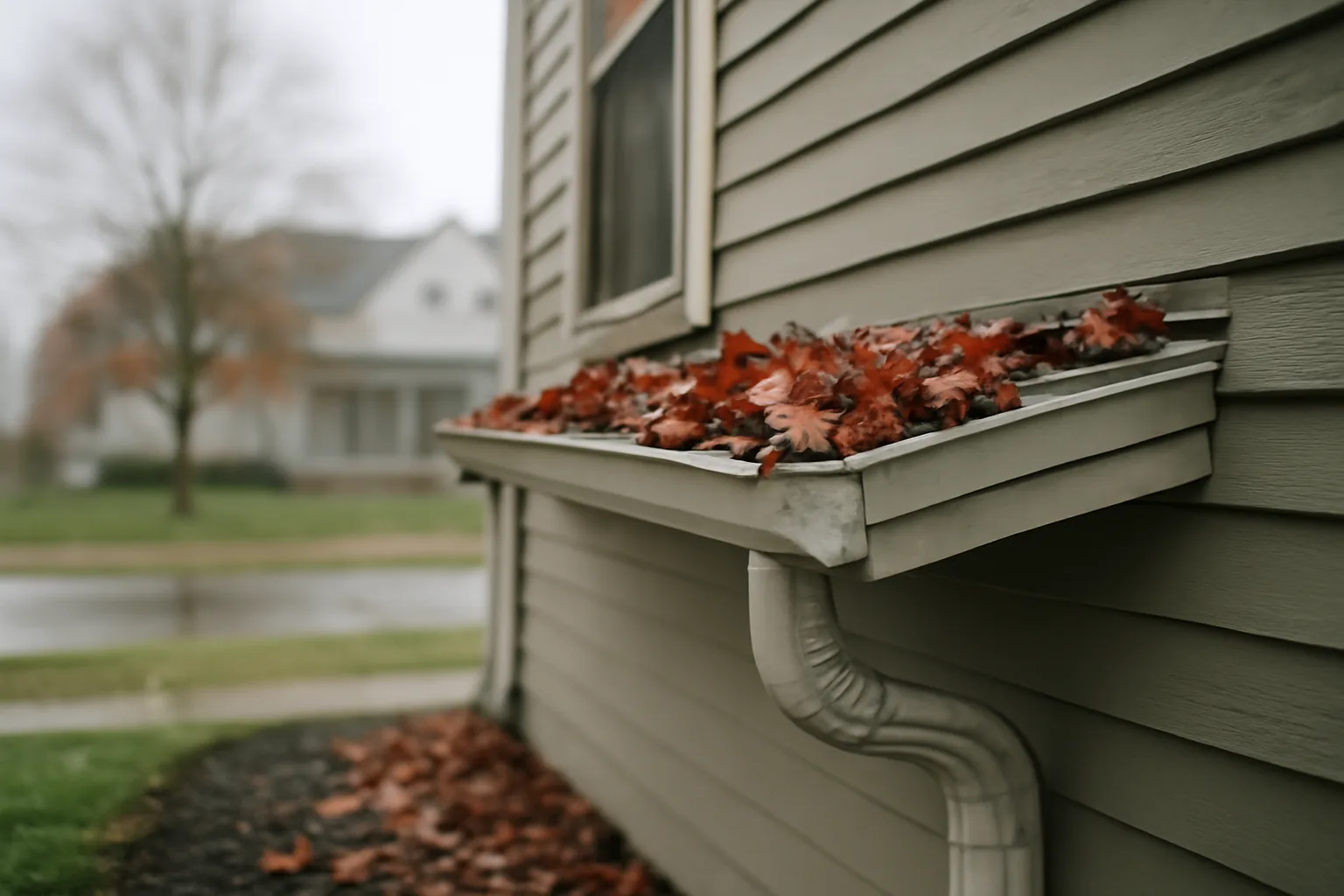
Leaf guard is a physical cover, screen, mesh, foam, brush, or hood that sits on or replaces the open top of a rain gutter so leaves and twigs do not sit in the trough. That is the product. It is not a federal license and it is not one patented shape.
Most systems still need a working gutter and a clear downspout. Water has to leave the roof edge, ride the guard or pass through openings, and reach the outlet. If hangers are sprung or the fascia is soft, the cover will not fix the leak.
People use one name for several products. Reverse-curve hoods rely on surface tension. Micro-mesh uses small holes. Screens clip into the trough. Foam fills it. Brushes sit in the channel. They fail in different ways. Foam packs with seed. Screens grow a wet mat. Thin mesh rusts. A hood can throw water past the gutter in wind-driven rain if the pitch is wrong.
University of Minnesota Extension walks through ice dams as meltwater that refreezes at cold eaves when attic heat melts snow higher on the roof.[12] A clogged or undersized gutter makes that overflow worse because the water has nowhere to go.
You are selling a water-control device on a building. Boards, building departments, and OSHA treat that as construction work. This leaf guard guide 111 exists because the national myth skips that part.
Homeowners buy these systems to climb less. That goal is honest. Never-clean-again is not. Shingle grit, maple seed, and pine needles still sit on top of many designs. Someone still has to look at the eave after a storm season.
How do you start leaf guard?
You start leaf guard the same way you start any small construction trade. Pick a service area, pick a product you can stand behind, form a business, get a free EIN, then check license rules with the state and city that will see your jobs. You do not start with a truck wrap.
Get the entity and tax ID first. The IRS says, "Applying for an EIN is a free service offered by the Internal Revenue Service."[7] Do not pay a reseller for a number the government issues at no charge.
Then search the contractor board. Some states fold gutter and leaf guard work into roofing or specialty contracting. Some leave it to cities. California's Contractors State License Board tells the public that work valued at $500 or more in combined labor and materials requires a current CSLB license.[9] Florida chapter 489 is the construction contracting code, and section 489.13 is the unlicensed contracting enforcement statute.[14]
Write a one-page safety plan before you lean a ladder. OSHA construction fall rules kick in at 6 feet on unprotected edges.[1] That is most two-story eaves, and it is many one-story eaves if you work off the gutter line.
Get insurance quotes next, not last. Then print a contract with scope, price, change orders, and the federal cooling-off notice if you sell in the home.[4]
Skip the videos that say no license is needed anywhere. They are wrong in enough zip codes to wreck a first year.
If you want a paper checklist for product choice and a pitch you can edit, LeafGuardPath sells a $149 one-time Product-Choice + Pitch Kit. The rest of this page stands without it.
Do you need a contractor license for leaf guard work?
You might. There is no federal leaf guard license. Whether you need a contractor license depends on the state, the city, the dollar value of the job, and whether the board treats gutters as roofing, sheet metal, or home improvement. Confirm the class and the current fee with the board that actually issues the card.
California's $500 combined labor and materials line is how CSLB explains the trigger, and Business and Professions Code section 7048 is the small-job statute people cite.[9][10] That number is California law. It is not a national free pass.
Florida treats unlicensed contracting as an enforcement matter under chapter 489. Read section 489.13, then confirm with the Department of Business and Professional Regulation how they classify gutter covers this year.[14] Do not guess from a Facebook thread.
Other states split. Some have no statewide gutter class. Cities still want a business tax receipt, a permit for fascia replacement, or a registration for home improvement sales. If you replace fascia, sister rafter tails, or tear into the roof edge, you left clip-on screen work. That is remodeling. Boards care.
If you already know the state, start with the board writeups for leaf guard board in california, leaf guard board in florida, leaf guard board in arizona, and leaf guard board in georgia. Those pages exist so you can see the board name and the packet they ask for.
Nobody here can promise approval or a processing time. Boards change forms. Confirm the live fee on the board site before you write a check.
What paper do you file before the first paid job?
Before the first paid job you usually need an entity filing with the state, an EIN if you will hire or open a business bank account, a local business license or tax certificate, and whatever contractor application your board requires. The SBA start sequence is still the boring correct order. Register the business, get tax IDs, then handle licenses.[13]
IRS classification matters if you bring help. If you control the work, set the hours, and supply the ladders, that person may be an employee. Read the IRS page on independent contractor versus employee before you pay someone on a 1099 and hand them a harness.[8]
Permits are local. A clip-on guard on an existing gutter sometimes needs nothing. New continuous gutter with a hood, new outlets through a fascia, or fascia replacement often needs a building permit. Ask the building department, not your competitor.
If you sell in the living room, the FTC Cooling-Off Rule applies to many in-home sales of $25 or more. You must give the buyer written notice they can cancel within three business days.[4][15]
Keep copies. Boards and plaintiffs both ask for paper you already should have had.
| Paper | When it applies | Where you confirm |
|---|---|---|
| Entity filing | Before you invoice | State secretary of state |
| EIN | Hiring or a business bank account | IRS EIN application, free [7] |
| Contractor license | Dollar or trade trigger in that state | State contractor board |
| Local business tax | Most cities or counties | City clerk or revenue office |
| Cooling-off notice | Many in-home sales of $25 or more | FTC Cooling-Off Rule [4] |
| RRP firm certification | Paid paint disturbance in pre-1978 housing | EPA or the state lead program [5] |
| Building permit | New outlets, fascia, structural repair | Local building department |
What insurance do leaf guard operators actually carry?
You need general liability that covers height work and completed operations, a commercial auto policy (or hired and non-owned auto if the agent will write it), and workers' compensation once you have employees in almost every state. An umbrella is optional until a lawyer is in the file. I would not run jobs on a personal renter policy and a hope.
I will not invent a premium. Carriers price roof-adjacent work all over the map. Two owners in the same county get different numbers because of claims history, training records, and whether they cut metal on site. Confirm every form with the agent and the surplus lines shop if your main market will not touch gutters.
Ask three direct questions. Does the GL form cover gutter and leaf guard installation at residential heights? Is there a residential roofing exclusion hiding in the endorsements? Are completed operations still in the form after you leave the driveway?
If you have no employees, some states still want the owner on a policy or they want a written exemption on file. Confirm with the state workers' compensation agency. Bonds are a license issue in some states, not an insurance hobby. If the board asks for a contractor bond, that is a board form and a surety.
What safety rules apply on a roof or ladder job?
OSHA construction fall protection applies when employees work on a walking or working surface with an unprotected side or edge 6 feet or more above a lower level.[1] A leaf guard install on a two-story eave is not a quick ladder hop under that text.
The regulation says: "Each employee on a walking/working surface (horizontal and vertical surface) with an unprotected side or edge which is 6 feet (1.8 m) or more above a lower level shall be protected from falling by the use of guardrail systems, safety net systems, or personal fall arrest systems."[1] That sentence is the job.
Portable ladders have their own rule. OSHA 1926.1053 covers use, including extending side rails at least 3 feet above an upper landing surface when the ladder is used for access.[2]
OSHA's fall campaign states that falls are the leading cause of death in construction.[3] Treat that as the risk register, not a poster in the shop.
If you are truly alone and have no employees, federal OSHA construction standards attach differently than they do for a crew. State plans can still reach you. A fall still wrecks the company. I would buy a harness, an anchor method that does not punch a leak, and ladder standoffs before I bought a vinyl cutter for the truck.
Do not work wet painted metal in wind. That is not a statute. That is how people slide.
Does lead paint law apply to gutter and fascia work?
It can. EPA's Renovation, Repair and Painting program applies to paid work that disturbs lead-based paint in pre-1978 housing and child-occupied facilities.[5] Fastening into painted fascia, scraping a drip edge, or replacing rotten painted boards is disturbance.
EPA requires firms to be certified and to use a certified renovator on covered jobs. The Code of Federal Regulations at 40 CFR 745.89 is the firm certification section.[6] EPA publishes the operator rules and the fee schedule on its lead program pages. Confirm the current firm fee and the certification term with EPA or an authorized state program before you send money.[5]
Some states run their own RRP program instead of EPA. The work practice is still the work practice.
If the house was built in 1985, this section may not apply. If you only snap a plastic screen into a clean trough and you do not disturb paint, you may be outside the program. The moment you sand, cut, or replace painted wood, you are in the fact pattern. Read the EPA operator page. Do not guess from a supplier flyer.
What should a leaf guard contract include?
A leaf guard contract should name the linear footage, the product (brand, model, metal, mesh size), what happens at inside corners and valleys, whether downspouts and hidden hangers are included, the price, any deposit cap your state allows, the start window, and who owns rotten wood discoveries. It should also carry the FTC cancellation notice when you sold the job in the home.[4][15]
Write exclusions. Does not include fascia replacement unless listed. Owner will water-test from the ground with a hose, not a pressure washer. Those two lines save more money than a new close rate.
Do not promise the gutter will never need service. That claim is how you buy callbacks and, if you put it in an ad, an ordinary truth-in-advertising problem.
If you take large deposits, check your state's home improvement deposit rule. Some states cap deposits or require extra disclosures. Confirm with the board. I would keep a one-page change-order pad on the truck. Rotten fascia shows up after the coil is already bent.
What first-year costs are real, and what is a waste of money?
Real costs are the entity filing, the license application (the board sets that fee), insurance, a safe ladder kit, fall gear, a brake if you run continuous gutter, coil and outlet inventory or a supply account, a phone you answer, and fuel. Those are the bones.
Waste of money in year one is a wrapped fleet you do not own, a franchise story you cannot verify against board records, lifetime no-clean marketing creatives, and paying a middleman for an EIN the IRS issues free.[7]
BLS listed a median annual wage for roofers of $50,670 in May 2023 on the Occupational Outlook Handbook roofers profile.[11] That is wage data for roofers, not your profit. Leaf guard work sits next to that trade. Use the live OOH table as a labor sanity check when you price a day. BLS updates the handbook, so read the current figure before you put it on a spreadsheet.
I would rent a brake for the first month if you are not sure you will stay in continuous gutter. Buying every attachment on day one is how people fund a garage sale. Manufacturer install classes can be worth a drive if they are about fastener patterns and water tests. Motivational weekends are not.
How do you pick a leaf guard system without buying a myth?
Pick a system you can water-test and service. Reverse-curve hoods, micro-mesh, screens, brushes, and foam are different products. They are not interchangeable and they are not all leaf guard in the same way.
I would avoid foam in heavy seed neighborhoods. I would avoid unbranded mesh that rusts in one season. I would be careful with any pitch that throws water over the back of the gutter and into the fascia.
Ask the supplier for a written install spec and a finish warranty that names coastal or high-UV conditions if you work those jobs. If they will not put the spec on paper, walk.
Match the metal to the existing gutter when you can. Mixed metals and mixed fasteners are how you get staining and galvanic mess.
Your state board pages are about the license, not the SKU. Still read them so you do not pick a product that requires roof-edge work you are not licensed to do. See leaf guard board in colorado and leaf guard board in alabama for how two different boards talk about the trade.
What do customers need to hear that sales scripts skip?
Tell them the truth about service. A guard reduces how often someone climbs a ladder. It does not repeal oak tassels, pine needles, or shingle grit. University ice-dam guidance still starts with attic air sealing and insulation, not with a cover alone.[12]
Tell them about wood. If the fascia is soft, the hanger will not hold. Price the wood or walk.
Tell them about water tests. A hose at the shingle edge is the acceptance test I would put in the contract. A salesperson pouring a bottle on one spot is not a test.
Tell them about the three-day cancel right when you sold it at the kitchen table. That is the law on covered sales, not a courtesy.[4]
Skip the fear script about the house collapsing next week. Clogged gutters can overflow, stain siding, and feed ice at the eave. That is enough, and it is true.
How do state boards treat gutter and leaf guard work?
State boards do not have a uniform leaf guard classification. They have roofing, sheet metal, specialty, home improvement, and sometimes a handyman exemption with a dollar cap. You have to read the classification language.
California talks in license classes and a dollar trigger.[9][10] Florida talks in chapter 489 contracting.[14] Other states list trades and stay silent on gutter covers, which means the city or the general contractor statute is what bites you.
Use a state page, then call the board with the exact scope. Say you will install micro-mesh on existing residential gutters with no roofing tear-off. Ask if that scope sits inside a class. Get a written FAQ or an email. Confirm the current application fee. Do not rely on a number you saw in a video.
Start with leaf guard board in connecticut, leaf guard board in alaska, and neighboring board pages if those are your maps. The point is the board, not a national myth.
LeafGuardPath is an independent publisher, not a law firm and not a service company. If you want the kit after you have read the board pages, it lives at /start.
Frequently asked questions
What is leaf guard?
Leaf guard is a cover, screen, mesh, foam, brush, or hood on a rain gutter that keeps leaves and twigs out of the trough. It still needs a working gutter and a clear downspout. It is a building product you install, not a federal license class. Different designs fail in different ways, so name the actual system in the contract.
How do you start leaf guard?
Form an entity, get a free EIN from the IRS, then check contractor and city license rules for your exact scope. Buy fall protection before marketing. Write a contract with footage, product, exclusions, and the FTC 3-day notice for in-home sales. Confirm every board fee on the live board page. Do not start with a wrapped truck.
Is leaf guard the same as a gutter guard?
In the field, yes. Homeowners, suppliers, and boards use both names for covers that sit on or replace the open gutter. The useful distinction is the design: reverse-curve hood, micro-mesh, screen, brush, or foam. Those are not the same product, and they do not share one failure mode or one license class.
Can I install leaf guard without a contractor license?
Sometimes, if your state or city has no trade class and you stay under a written dollar exemption. California's public $500 labor-and-materials line is not a national rule. Florida enforces unlicensed contracting under chapter 489. Confirm the class and any exemption with the board that would cite you.
Do I need workers compensation if I have no employees?
Many states let a true owner-only shop skip a payroll policy, but some still want an exemption filing or they want the owner on the policy. The moment you hire, almost every state wants coverage. Confirm with the state workers' compensation agency. Do not take a forum answer as the filing.
Does OSHA apply to a one-person leaf guard crew?
Federal OSHA construction standards attach to employers and employees. A true one-person shop is a different fact pattern, but state plans and general duty rules can still reach you, and a fall still ends the company. OSHA 1926.501's 6-foot unprotected-edge rule is the standard I would build the job around anyway.
Do I need EPA RRP certification for fascia screws?
If the house is pre-1978 and your paid work disturbs painted wood, you may be inside EPA's Renovation, Repair and Painting program. Screwing into painted fascia, scraping, or replacing rotten painted boards is the fact pattern. Confirm firm certification and the current fee with EPA or the state lead program. A 1985 house is a different case.
What is the FTC cooling-off rule for kitchen-table sales?
The FTC Cooling-Off Rule gives buyers three business days to cancel many sales of $25 or more made at a place that is not your normal place of business, including the buyer's home. You must give written notice. Put it in the leaf guard contract when you sold the job at the kitchen table. Confirm the current text at 16 CFR Part 429.
How long will my contractor license take?
There is no honest national number, and anyone who quotes one is guessing. Some boards are a short packet. Some need an exam, a bond, and a background check. Processing times move. Confirm the current steps and any posted timeline with the board. No publisher can guarantee approval or a date.
Should I buy a leaf guard franchise in year one?
I would not, not until you can install, water-test, and service a system without a brand script. A franchise does not replace a contractor license, insurance, or OSHA rules. If you still want one later, read the franchise disclosure document and check the franchisor against the same state board you will face on jobs.
Can I advertise that customers will never clean gutters?
I would not. Many systems still collect seed, needles, and grit on top. Ice-dam risk still starts with attic heat, not with a cover alone. Overclaims create callbacks and ordinary advertising-law risk. Sell fewer climbs and a written water test. That is a claim you can stand on.
What tools do I actually need to start?
A rated extension ladder, standoffs, fall gear if you work heights, snips, drivers, a hose for water tests, and a way to haul coil if you bend continuous gutter. A brake can be rented until the work is steady. Skip the vinyl wrapper and the extra saws. Confirm any manufacturer fastener spec before you invent your own pattern.
Does a homeowners policy require leaf guards?
No national rule requires a leaf guard for a homeowners policy to exist. Insurers care about water and ice damage, and clogged gutters can feed both, but that is not the same as a mandate. Do not sell the system as an insurance requirement unless the customer's carrier put it in writing.
Where do I confirm the license class and fee?
With the contractor board or city that would issue the citation, using your exact scope. Ask whether mesh on existing gutters sits in roofing, sheet metal, specialty, or a handyman exemption. Confirm the live fee on the board page. State writeups help you find the board. They do not replace the board.
Sources
- OSHA 29 CFR 1926.501 Duty to have fall protection: Construction employees on unprotected edges 6 feet or more above a lower level must be protected by guardrails, safety nets, or personal fall arrest systems.
- OSHA 29 CFR 1926.1053 Ladders: When portable ladders are used for access to an upper landing, side rails must extend at least 3 feet above that landing.
- OSHA Stop Falls campaign: Falls are the leading cause of death in the construction industry.
- EPA Renovation, Repair and Painting Program: EPA's RRP program applies to paid work that disturbs lead-based paint in pre-1978 housing and child-occupied facilities.
- 40 CFR 745.89 Firm certification: EPA lead renovation firm certification is set out in 40 CFR 745.89.
- IRS Apply for an Employer Identification Number (EIN) online: Applying for an EIN is a free service offered by the Internal Revenue Service.
- IRS Independent contractor (self-employed) or employee: Worker status depends on behavioral control, financial control, and the type of relationship, not on a 1099 label.
- CSLB When a License is Required: In California, contracting for work valued at $500 or more in combined labor and materials requires a current CSLB license.
- California Business and Professions Code section 7048: California's contractor licensing chapter has a small-project dollar exemption written at $500.
- BLS Occupational Outlook Handbook, Roofers: BLS reported a median annual wage for roofers of $50,670 in May 2023 on the roofers profile.
- U.S. Small Business Administration, 10 steps to start your business: SBA's start sequence includes registering the business, getting tax IDs, and handling licenses and permits.
- Florida Statute 489.13 (2023), Unlicensed contracting: Florida Statute 489.13 addresses unlicensed contracting and related enforcement.
- 16 CFR Part 429 Rule Concerning Cooling-Off Period for Sales Made at Homes: 16 CFR Part 429 sets the federal cooling-off period and written notice duties for covered in-home sales of $25 or more.