Last updated 2026-08-19
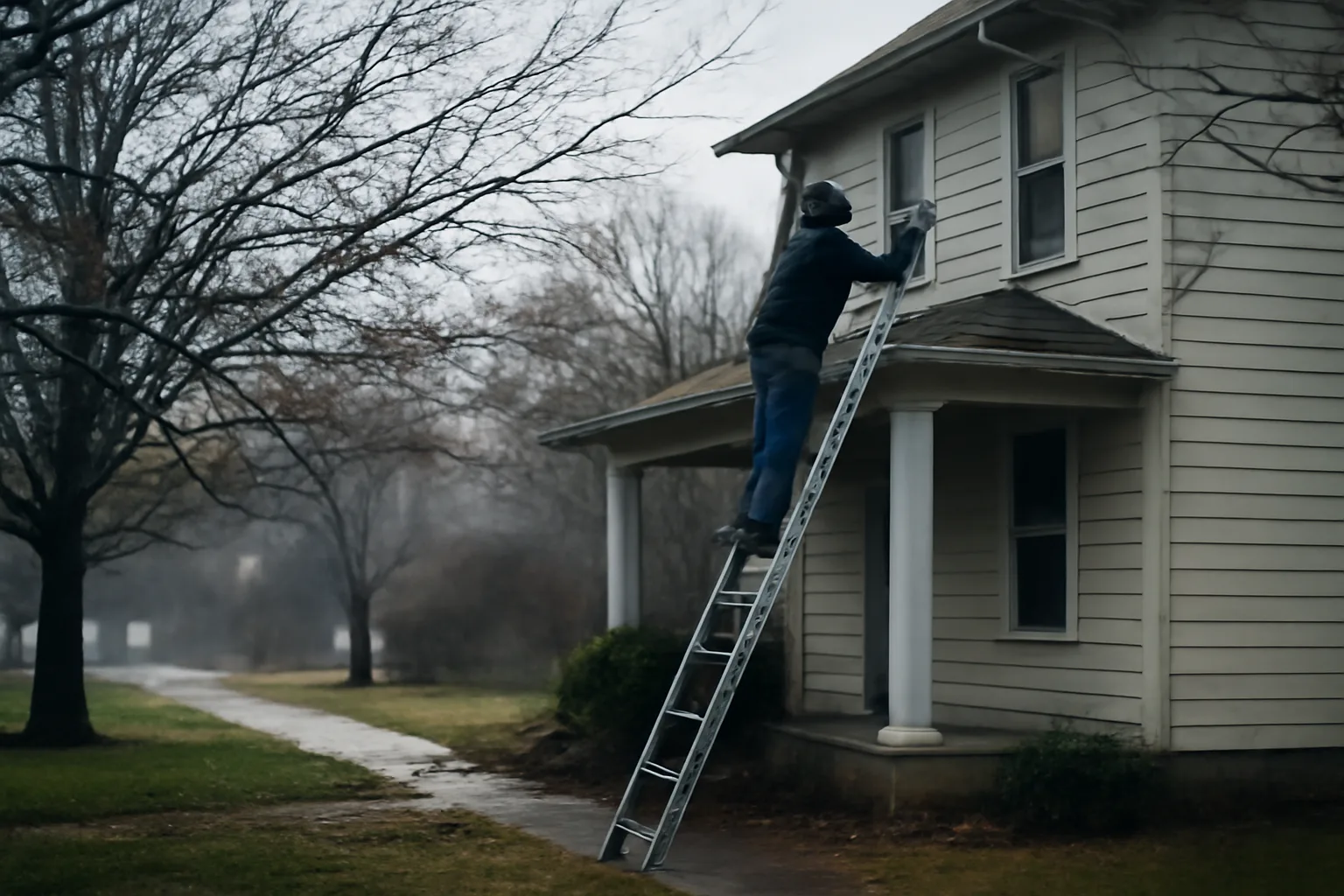
TL;DR
Leaf guard is a cover or screen that keeps debris out of rain gutters. Starting the work is a local trade path, not a national license. Form an entity, get a free EIN, confirm whether gutter work needs a contractor card in your state, buy liability insurance, and follow OSHA fall rules. Confirm fees and classifications with the board that issues the card.
What is leaf guard?
Leaf guard is a physical cover, mesh, screen, foam insert, or reverse-curve hood that sits on or in a rain gutter so leaves and shingle grit do not pile in the trough. Homeowners buy it to cut ladder trips. Installers sell and fasten it as a small exterior trade.
That is the whole product. It is not a federal license class. It is not a protected job title. Hardware stores sell short DIY runs. Contractors sell full-house footage, custom corners, and the labor of working the fascia without peeling the drip edge.
You will hear micro-mesh (stainless or aluminum cloth on a frame), wider screens, brush inserts, foam, and helmet-style reverse-curve systems. Mesh costs more and handles pine needles better. Foam is cheap and dies in sun and algae. Reverse-curve needs enough roof pitch or water sheets past the gutter. I would not lead a first-year truck with foam. It comes back as callbacks.
The trade sits next to siding and gutter hanging. The Census Bureau files guttering under NAICS 238170, Siding Contractors. That class "comprises establishments primarily engaged in installing siding of wood, aluminum, vinyl or other exterior finish material" and the same industry write-up covers guttering and downspouts [1]. Roofers do a lot of the same ladder days. The BLS Occupational Outlook Handbook posts a median annual wage for roofers that has sat near $48,000 to $51,000 in recent May surveys. The number moves every year, so read the live table instead of memorizing a course slide [2].
A one-person leaf guard shop does not earn a BLS median as salary. You bill linear feet plus stories. You still pay insurance, fuel, and the week it rains. If you want a longer product definition tied to the filing sequence, use What leaf guard is and the real paper path to start.
How do you start leaf guard?
You start leaf guard by treating it as a local contracting business. Form an entity or a DBA, get a free EIN from the IRS, ask the contractor board and the city building department whether gutter covers are licensed work, buy general liability, and only then put a ladder on the fascia. There is no national leaf guard card.
The SBA register-your-business page is the right first read if you have never filed with a secretary of state [3]. Most people pick an LLC because it separates the truck from the house. A sole prop is cheaper on day one and mixes creditors with your kitchen table. I would form the LLC if you plan to hire or if a commercial insurer asks for the entity.
Get the EIN yourself on IRS.gov. The Service says, "Applying for an EIN is a free service offered by the Internal Revenue Service." [4] Anyone who charges you for that number is reselling a free form.
Then the license question, which national ads skip. Gutter and leaf guard work is often a specialty or sheet-metal class, sometimes roofing, sometimes unlicensed under a dollar threshold. California's C-43 sheet metal classification names gutters in the scope of the class [5]. Florida puts construction contracting definitions in section 489.105, which is where you learn whether your job is contractor work at all [6]. Other states leave it to cities. Confirm the classification and the live fee with the board. Do not copy a fee off a blog.
Insurance binds after you have a legal name. Hire help and you usually trigger workers' compensation, which the U.S. Department of Labor notes is run at the state level [7]. Fall protection is not a suggestion once you are 6 feet up [8].
A tighter sequence is in Leaf guard guide 100 for licensing and first-year work.
Do you need a contractor license to install leaf guards?
Sometimes. It depends on the state, often the city, the contract size, and whether you hang new gutters or only clip a cover on existing troughs. There is no federal leaf guard license. You confirm with the contractor board and the permit desk, not with a product brochure.
California is the clean example because the board publishes class language. The C-43 sheet metal page describes a contractor who fabricates and installs sheet metal, and it lists gutters in that scope [5]. Some shops instead work under a roofing class or a C-61 specialty. The right class is the one the board will defend after a complaint. Ask them in writing.
Florida runs construction licensing through chapter 489. Section 489.105 is the definitions statute. Read it before you advertise "licensed" [6]. If your work sits under a registered or certified class, the state licensing desk is the one that matters. If it does not, a city tax receipt still may.
Plenty of states have no statewide contractor card for gutter-only work. That does not mean you are free. Cities still issue business licenses. HOAs still want insurance certificates. A homeowner's insurer still asks who fastened into the fascia. I would rather over-ask the board than explain an unlicensed contract later.
| Place | What to read first | What you confirm with the desk |
|---|---|---|
| California | CSLB C-43 and related class pages | Class, exam, live fee |
| Florida | Fla. Stat. 489.105 | Whether the job is contracting |
| State with no trade card | City or county business license desk | Tax receipt and permit trigger |
Fees, test dates, and experience hours change. Confirm them on the board site the week you apply. For a state-priced look at the consumer side, leaf guard cost in california is the companion page.
What paper do you file in year one?
Year-one paper is entity formation, an EIN, a local business tax receipt or city license, a contractor application if your board says the work is licensed, insurance binders, written home-solicitation contracts, and EPA firm paperwork if you will disturb paint on a house built before 1978.
Start with the secretary of state for the LLC or corporation, then the IRS for the EIN [3][4]. Next is the city or county. Many towns want a business tax receipt before you put a magnetic sign on the door. That receipt is not a contractor license. Do not confuse the two.
If the contractor board claims gutter covers, you file their application, proof of experience or a qualifier, exam scheduling, and whatever bond or cash deposit they name this year. I will not quote a fee here because boards change them. Confirm the current amount on the application page.
Keep a contract template that names the linear footage, the product, the stories, what happens if the old gutter is rusted through, and the three-day cancel language when you sell at the house [12]. Save photos of the fascia before you fasten. Change orders in writing. The paper path is dull. It is also what keeps a chargeback from eating a week of work.
If you want another walk-through of the same stack, A leaf guard guide for first-year operators and paper repeats the sequence from a different angle.
What insurance do first-year leaf guard operators actually buy?
Buy a general liability policy that can print a $1 million per-occurrence certificate, a commercial auto policy on the truck you actually use, and workers' compensation the day you have an employee. That is the useful set. Fancy bundles can wait.
I will not invent a typical premium. Price depends on state, claims, payroll, and whether you go on roofs or stay on ladders at the eave. Get three quotes with the same limits. Ask each underwriter whether leaf guard or gutter work is in the class they rated. Some carriers treat it as roofing and the price jumps.
Workers' compensation is state law, not a vibe. The Department of Labor's work-comp topic page is blunt that programs are administered by states and that employers generally must provide coverage [7]. A helper you pay in cash is still an employee in most audits. That is how shops get hurt.
Inland marine (the floater on tools and a brake) is worth it after the first theft. An umbrella is a year-two buy unless a general contractor asks for $2 million. Do not waste year-one cash on a branded wrap and a policy you never read. Read the exclusions. Water damage from a bad crimp is the claim that shows up.
What does OSHA require on gutter and roof jobs?
OSHA requires fall protection on construction walking surfaces with an unprotected edge 6 feet or more above a lower level. Gutter and leaf guard work hits that height on a normal one-story eave. Plan the protection before the first sales appointment, not after a scare.
The rule text is not vague. 29 CFR 1926.501(b)(1) says "each employee on a walking/working surface (horizontal and vertical surface) with an unprotected side or edge which is 6 feet (1.8 m) or more above a lower level shall be protected from falling by the use of guardrail systems, safety net systems, or personal fall arrest systems." [8]
Ladders have their own part. 29 CFR 1926.1053 covers portable ladders, including use, inspection, and the boring rules people skip (three points of contact, no standing on the cap) [9]. NIOSH keeps a falls topic page because this is how crews get hurt, not because the agencies need content [15].
BLS counted 865 fatal falls, slips, and trips in 2022, up from 850 in 2021. Construction had 1,069 fatal work injuries that year [13]. Those are all jobs, not leaf guard only. The physics is the same when you lean to snap a clip at the corner.
I would budget a harness, a rated anchor method you were trained on, ladder stabilizers, and the time to move the ladder instead of reaching. Skipping that to save twelve minutes is a bad trade.
Does the EPA RRP rule apply to leaf guard jobs?
Yes, when the job disturbs lead-based paint in housing, child care, or preschools built before 1978. Many leaf guard jobs screw into painted fascia. That can be a renovation under the rule. If the house is older than 1978 and you will scrape, sand, or otherwise disturb paint, treat it as RRP unless testing shows otherwise.
EPA's program page states: "The RRP Rule requires that firms performing renovation, repair, and painting projects that disturb lead-based paint in homes, child care facilities and pre-schools built before 1978 have their firm certified by EPA (or an EPA authorized state), use certified renovators who are trained by EPA-approved training providers and follow lead-safe work practices." [10]
EPA publishes a $300 firm certification fee for the Renovation, Repair and Painting program [11]. That fee is one of the few stable federal numbers in this trade. Still click the live page the week you file. A certified renovator has to be assigned and the work-practice rules (plastic, cleaning, the pamphlet) have to happen. Skipping RRP on a pre-1978 fascia because you only installed guards is how you buy a problem.
Post-1978 houses are the easy ones. Still photograph the paint condition. Still write the year built on the job ticket.
How much does it cost to start a leaf guard operation?
Honest start-up cash is the entity filing (often tens to a few hundred dollars, state by state), the free EIN, liability and auto insurance (get quotes, do not use a national average), a pair of decent extension ladders and stabilizers, basic fall gear, hand tools, and enough product for two or three jobs. The truck you already own is fine.
I will not publish a fake average franchise fee or a made-up equipment package total. Those numbers rot. City licenses and contractor exams have their own line items. Confirm each one with the office that cashes the check.
Where money actually goes: insurance binders, the first coil or mesh order, fuel, and the week you have no installs. Where money gets wasted: wrap vinyl on a new van, national lead portals, a shop lease before you have a crew, and foam inventory that yellows. If you already know the system you will install, you do not need a pitch kit. If you want a packaged product-choice and pitch stack, LeafGuardPath sells a $149 one-time Product-Choice + Pitch Kit. The statutes still matter more than the binder.
State-level consumer price pages help you see what houses actually pay. Start with leaf guard cost in florida or leaf guard cost in alabama and then pull three local competitor quotes yourself.
What equipment do you need, and what is a waste?
You need two rated extension ladders, standoff stabilizers, a harness and a connecting system you know how to use, tin snips, a screw gun, the fasteners the manufacturer specifies, a folding tool or brake if you fabricate, magnets, chalk, and a way to haul 10-foot or 12-foot lengths without kinking them. That list installs houses.
A shop brake is worth it if you run continuous gutters plus guards. It is a waste if you only clip covers onto gutters someone else hung. Foam inventory is a waste. A second truck is a waste until the first one is booked five days a week. Custom uniforms can wait.
Buy the ladder that meets the duty rating for you plus the product. Read 1926.1053 before you argue with a helper about the top cap [9]. Cheap fall gear that you do not trust is worse than none because it makes you sloppy. I would spend on training and on the anchor method, not on a logo.
Keep a simple kit box: extra end caps, outlets, screws, sealant the manufacturer allows, and a moisture meter if you sell the fact that you found rot. Do not invent rot to sell gutters. Photograph it.
How should you price a leaf guard job?
Price by the linear foot, then add stories, pitch, inside and outside corners, end caps, and any gutter replacement. There is no honest national per-foot number. Markets move with labor, leaf load, and how many two-story colonials you have.
Do this instead of downloading a price from a forum. Call three local companies as a homeowner. Write down their footage price, what they exclude, and how they treat two-story and steep. Then build your number from the material invoice plus hours plus a margin that still pays insurance. If a lead vendor wants more than you keep, hang up.
High houses cost more because the OSHA setup costs more, not because you feel like it [8]. Rotten fascia is a change order, not a courtesy. Pine needles want mesh, not a wide screen, and mesh costs more. Say that before the deposit.
For a paper-first companion, Leaf guard guide 96 and the real first-year paper path is next. Your county will still disagree with any national per-foot claim. That is fine.
What sales rules apply when you sell at the house?
If you sell in the buyer's home, the FTC Cooling-Off Rule usually gives the buyer three business days to cancel. You must give written notice. This is the rule that bites leaf guard crews who run kitchen-table closes.
The Rule (16 CFR Part 429) applies to many sales of $25 or more that happen at a place that is not your place of business [12][14]. The FTC Cooling-Off Rule page is the one to print and put in the folder. eCFR has the operative text if you like statutes.
I would put the cancel form in every in-home packet, even when you think the Rule might not apply. It is cheap. Fighting a bank chargeback is not. Do not hide the form in tiny type. Do not start work during the cancel window unless the buyer signs something your lawyer actually likes (and you should have a lawyer glance at the template once).
Phone and website sales have different rules. In-home is the one that matches this trade.
What first-year mistakes waste money?
The expensive mistakes are predictable. Buying national leads before you can install next week. Stocking foam. Skipping workers' comp on a helper. Ignoring RRP on a 1962 ranch. Calling yourself licensed in a state that never issued you a card. Starting tear-off during the three-day cancel window.
A wrapped van is not a marketing plan. A shop lease is not a marketing plan. I would run the first twenty jobs off a clean pickup, a real contract, and photos. Learn which product actually fits your tree canopy. Then spend.
Hiring off the books feels cheaper until an injury. Falls are how a large share of construction deaths happen [13]. Your cheap day-labor plan does not survive that.
If you need another pass on the same warnings, Leaf guard guide 97 for people who need the paper path is written for that reader.
Which state differences actually matter?
The differences that matter are license vs no license, whether cities add a permit for fascia fasteners, wind rules on the coast, and ice on northern eaves. Product hype does not change those.
Coastal Florida cares about how the gutter and cover fasten when the wind comes. Northern eaves ice. Dry southwest jobs fail more from sun-baked sealant than from maple leaves. None of that is in a national script. Walk two blocks of the zip code you will sell and look at the trees and the roof pitch.
Use the board site, the city permit search, and one conversation with a local inspector. Confirm every fee. Confirm whether a leaf guard-only job needs a permit. Nobody here can give you an approval or a processing time because we are not the board.
LeafGuardPath is an independent publisher. We are not a law firm and not a service company. If you want the kit after you have read the statutes, it is at /start.
Frequently asked questions
What is leaf guard?
Leaf guard is a cover, mesh, screen, foam, or reverse-curve hood that keeps debris out of a rain gutter. It is a building product plus install labor, not a federal license. Hardware stores sell short runs. Contractors sell full-house footage, corners, and the work on the fascia. Pick the product for the trees on that lot, not for the brochure photo.
How do you start leaf guard?
Treat it as a local trade. File an entity or DBA, get a free EIN from the IRS, ask your contractor board and city whether gutter covers are licensed work, bind general liability, and set fall protection before the first eave. Confirm every fee with the board that takes the money. There is no national leaf guard card.
Is leaf guard a licensed occupation by itself?
No. Boards license contracting, sheet metal, roofing, or home improvement. Leaf guard is the product you install inside those classes, or sometimes outside them if your state has no card for gutter-only work. Read the class language. Ask the board in writing. City tax receipts are not the same thing as a contractor license.
Can I install leaf guards without a contractor license?
In some states and cities, yes, especially on small contracts or when you only clip a cover onto an existing gutter. In others, gutters sit inside sheet metal or roofing and you need the card before you advertise. Confirm with the contractor board and the permit desk. Do not copy another shop's truck lettering as legal research.
Does OSHA apply if I work alone?
Yes. OSHA construction rules still apply to the work, and the 6-foot fall trigger does not care that you have no crew. A one-person shop still falls off a one-story eave. Use the ladder rules in 29 CFR 1926.1053 and plan fall protection before you lean for a corner clip.
Do I need EPA RRP certification for leaf guard jobs?
You need the firm certification and a certified renovator when the job disturbs paint on housing or child-occupied facilities built before 1978. Screwing into painted fascia can be enough. EPA publishes a $300 firm fee. Post-1978 houses are simpler. When the year built is fuzzy, test or treat it as RRP.
How do I get an EIN for a leaf guard business?
Apply on IRS.gov. The IRS does not charge for an EIN. Ignore sites that sell the number. You want the EIN after the state entity exists so the names match. Keep the CP 575 notice in your insurance folder.
What insurance do I need to install gutter guards?
General liability that can issue a $1 million certificate, commercial auto on the truck you drive to jobs, and workers' compensation once you have an employee. Ask each carrier if they rated gutter or roofing. I will not invent a premium. Get three quotes with identical limits.
Can a homeowner cancel a leaf guard contract?
Often yes, if you sold in their home. The FTC Cooling-Off Rule gives three business days on many in-home sales of $25 or more, and you must provide written notice. Put the form in the packet. Do not start tear-off during that window unless counsel says your exception is real.
How long does a contractor license take?
Nobody honest can give you a national number. Boards change exam seats, background queues, and experience reviews. Confirm processing with the board that issues the class. This site will not guess a wait time or promise an approval.
Is foam leaf guard worth selling in year one?
I would skip it. Foam is cheap to buy and expensive in callbacks once sun, algae, and shingle grit show up. Mesh or a well-detailed metal cover is easier to stand behind. If a customer insists on foam, write the maintenance limits on the contract.
What NAICS code do leaf guard installers use?
Census NAICS 238170 (Siding Contractors) is the industry that includes guttering and downspouts. Use it on forms that ask for a NAICS code unless your accountant has a reason to file you elsewhere. It is a statistical label, not a license.
Do I need workers' compensation for one helper?
In most states, yes, once that person is your employee. Paying cash does not settle it. Workers' compensation is state law. Ask the state fund or a licensed agent before the helper's first ladder day, not after a fall.
Sources
- U.S. Census Bureau, NAICS 238170 Siding Contractors (2022): Guttering and downspouts are classified with siding contractors under NAICS 238170.
- U.S. Bureau of Labor Statistics, Occupational Outlook Handbook: Roofers: BLS publishes the median annual wage and outlook for roofers, a close occupational comparison for gutter and leaf guard ladder work.
- U.S. Small Business Administration, Register your business: New firms register with the state and obtain local licenses as part of launching.
- California Contractors State License Board, C-43 Sheet Metal classification: California's C-43 sheet metal classification includes fabrication and installation of gutters.
- Florida Statutes, section 489.105 (2023): Florida section 489.105 defines contractor and related construction classes used to decide if work is licensed.
- U.S. Department of Labor, Workers' compensation topic page: Workers' compensation programs are administered by the states and employers generally must provide coverage.
- OSHA, 29 CFR 1926.501 Duty to have fall protection: Construction employees on unprotected edges 6 feet or more above a lower level must have fall protection.
- OSHA, 29 CFR 1926.1053 Ladders: Portable ladder use, inspection, and work rules for construction are set in 1926.1053.
- U.S. EPA, Lead Renovation, Repair and Painting Program: Firms that disturb lead-based paint in pre-1978 homes and child-occupied facilities must be certified and use certified renovators.
- U.S. Bureau of Labor Statistics, Census of Fatal Occupational Injuries 2022 news release: BLS counted 865 fatal falls, slips, and trips in 2022 and 1,069 fatal injuries in construction.
- eCFR, 16 CFR Part 429 Rule Concerning Cooling-Off Period for Sales Made at Homes: 16 CFR Part 429 is the operative Cooling-Off Rule text for covered in-home sales.
- CDC NIOSH, Falls in the workplace: NIOSH treats workplace falls, including ladder falls, as a primary injury-prevention topic for construction-type work.